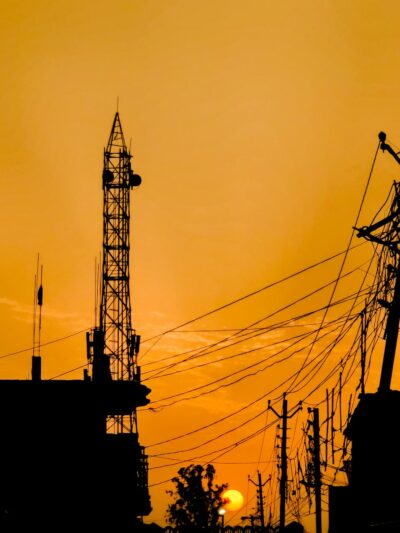
The global power distribution utilities sector is undergoing a profound transformation, moving beyond its traditional role as a passive deliverer of electricity. Driven by the imperatives of decarbonization, digitalization, and decentralization, this vital industry segment is evolving into a dynamic, intelligent, and interconnected ecosystem. This report provides a detailed, research-based analysis of the global power distribution utilities market, highlighting its current landscape, key drivers, emerging trends, and future outlook.
1. Market Overview and Sizing
The power distribution utility market, a critical component of the broader electric utility sector, is poised for significant growth. The global electric distribution utility market is projected to grow from a value of approximately $431.6 billion in 2025 to $825.5 billion by 2035, exhibiting a robust Compound Annual Growth Rate (CAGR) of 6.7%. This growth is underpinned by rising global energy demand, accelerated urbanization, and a strong push for modernizing aging infrastructure.
Regionally, the market is led by North America, Asia-Pacific, and Europe. Notably, countries like China and India are key growth engines, with projected CAGRs of 9.0% and 8.4% respectively, driven by massive industrialization, rural electrification initiatives, and government-led renewable energy programs.
2. Key Industry Drivers
- Growing Energy Demand and Electrification: The world’s insatiable appetite for electricity, fueled by population growth, rapid industrialization, and the electrification of transportation and buildings, is a primary growth driver. The federal Energy Information Administration (EIA) predicts a significant rise in power demand in the coming years.
- Renewable Energy Integration: The global shift towards cleaner energy sources like solar and wind is fundamentally reshaping the grid. Power distribution utilities are at the forefront of this transition, needing to integrate a growing number of intermittent and decentralized energy sources. This requires substantial investments in grid infrastructure to ensure stability and reliability.
- Government Policies and Initiatives: Governments worldwide are actively pushing for grid modernization and decarbonization. Schemes like India’s Revamped Distribution Sector Scheme (RDSS) and policies aimed at achieving net-zero emissions are creating significant market opportunities for utilities to upgrade their networks with advanced technologies.
- Technological Advancements: The rapid development and adoption of technologies such as Advanced Metering Infrastructure (AMI), Internet of Things (IoT), and Artificial Intelligence (AI) are key to transforming the sector. These technologies enable real-time monitoring, automated grid management, and improved customer service, enhancing operational efficiency and reducing losses.
3. Challenges and Industry Headwinds
Despite the promising growth trajectory, the power distribution utilities sector faces several significant challenges, particularly in developing economies.
- High Aggregate Technical and Commercial (AT&C) Losses: In many regions, utilities grapple with substantial power losses due to a combination of technical inefficiencies (aging infrastructure) and commercial losses (theft, unmetered consumption, and poor billing). This is a major drag on financial health and service quality.
- Financial Distress of Utilities: Many public-sector utilities, particularly in countries like India, suffer from poor financial health. The gap between the average cost of supply and the average realized revenue, coupled with delayed subsidy payments and high debt, creates a cycle of underinvestment and operational inefficiency.
- Grid Congestion and Intermittency: The influx of distributed energy resources (DERs) from rooftop solar and other sources can create grid stability issues. The traditional one-way flow of power is being replaced by a multi-directional flow, requiring sophisticated grid management and a flexible, resilient network.
- Cybersecurity Risks: As utilities become more digitalized and interconnected, they become increasingly vulnerable to cyberattacks. Protecting critical infrastructure from disruption is a growing concern and a major investment area.
4. Transformative Trends and the Future Outlook
The future of power distribution utilities is defined by a shift from a centralized, passive model to a decentralized, intelligent, and customer-centric one.
- Smart Grids and Digitalization: The rollout of smart grids is a central theme. This includes the deployment of smart meters, sensors, and automation systems to enable two-way communication between the utility and the consumer. Digitalization is also leveraging AI for enhanced demand forecasting, optimized resource allocation, and predictive maintenance.
- Decentralization and Microgrids: The rise of DERs is leading to the proliferation of microgrids and localized power generation. These small-scale, independent energy systems enhance grid resilience and can provide reliable power to remote or underserved areas, especially in the face of increasing extreme weather events.
- Electrification of Transportation: The mass adoption of electric vehicles (EVs) will create a new and significant demand on the distribution grid. Utilities must plan and invest in charging infrastructure and smart charging programs to manage this new load efficiently.
- Enhanced Customer Experience: Utilities are increasingly focused on improving customer satisfaction through digital-first solutions, transparent billing, and personalized services. This includes offering tools for customers to monitor their energy usage and participate in demand-response programs.
5. Competitive Landscape and Key Players
The global power distribution utilities market features a mix of traditional infrastructure players and technology-focused companies. Key players include:
- Infrastructure and Equipment Providers: ABB Ltd., Siemens, Schneider Electric, Eaton Corporation, General Electric, and Mitsubishi Electric are major providers of power distribution equipment like transformers, switchgear, and control systems.
- Utility Operators: Companies like Enel (Italy), ENGIE (France), Iberdrola (Spain), and National Grid (UK/US) are significant multinational utility operators.
- Regional and National Players: This includes major state-owned and private entities that manage power distribution within their respective countries, such as State Grid Corporation of China (SGCC), and various regional Distribution Companies (DISCOMs) in India and the United States.
Sources:
- Future Market Insights. “Electric Distribution Utility Market | Global Market Analysis Report – 2035.” https://www.futuremarketinsights.com/reports/electric-distribution-utility-market
- PRS India. “Discussion Paper: Power Distribution Sector.” https://prsindia.org/billtrack/prs-products/discussion-paper-power-distribution-sector
- EY. “2025 Utilities sector outlook.” https://www.ey.com/en_us/insights/power-utilities/utilities-sector-outlook
- PwC. “Power and utilities industry trends.” https://www.pwc.com/us/en/industries/energy-utilities-resources/library/power-and-utilities-trends.html
- World Bank. “Reinvigorating India’s Electricity Distribution for Access, Reliability, and Digitalization.” https://www.worldbank.org/en/results/2025/07/10/reinvigorating-india-s-electricity-distribution-for-access-reliability-and-digitalization
- StartUs Insights. “Top 10 Power Distribution Trends in 2025.” https://www.startus-insights.com/innovators-guide/power-distribution-trends/


